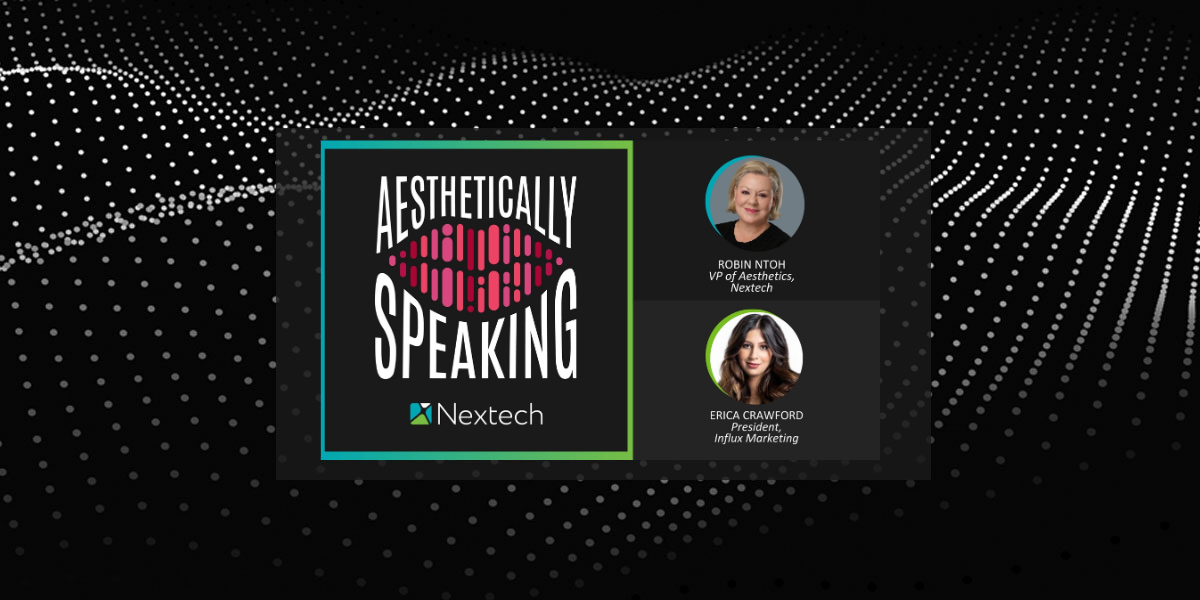
From the truth about Instagram follower counts vs. engagement to what you can and can’t say about GLP-1s in your ads, Erica Crawford joins the podcast to dismantle some of the most widely held beliefs in aesthetic practice marketing.
Get the real numbers behind successful practices (spoiler: huge follower counts aren’t everything), hear why 1-star reviews aren’t always bad, and why social media should never distract you from lovingly maintaining your website.
Erica and Robin cover:
- The do’s and don'ts to avoid getting a lawsuit when marketing GLP-1s
- How GLP-1 patients could be your future face lift and tummy tuck patients
- Why marketing is a lot like managing your finances
- SEO vs. local optimization – what's the difference?
- Why seeing only 5-star reviews can be a red flag (we’re looking for that 4.8!)
- How to respond to Google reviews without violating HIPAA
- What types of content you should outsource vs. what’s better handled in-house
- Why your email and text message lists are gold—the cheapest, highest ROI tools in your marketing arsenal
Listen
Watch
Guest
Erica Crawford, President
Influx Marketing
Erica is a seasoned public relations and digital marketing expert specializing in medical aesthetics. She helps practices grow, speaks at industry events, and leads Influx Marketing, a firm focused on aesthetic medical practice marketing.
Learn more about Influx Marketing
Follow Influx on Instagram @influxmarketing
Connect with Erica on LinkedIn
Host
Robin Ntoh, VP of Aesthetics
Nextech
Access Robin's toolkit of helpful resources to help optimize practice operations»
Transcript
Announcer (00:06):
You are listening to the Aesthetically Speaking podcast presented by Nextech.
Robin Ntoh (00:11):
Welcome back to Aesthetically Speaking, the podcast presented by Nextech. I'm Robin Ntoh, and today I have Erica Crawford with me. She's the president at Influx Marketing. Erica, welcome.
Erica Crawford (00:20):
Hi, Robin. Thank you so much for having me.
Robin Ntoh (00:22):
So excited that we can talk all things marketing, especially those controversial subjects today. So before we get into it, let's talk a little bit about yourself, your background. How did you get into the world of marketing and especially when it comes to aesthetics?
Erica Crawford (00:35):
Absolutely. So I originally started with public relations, which is a different subject, but it's a cousin of marketing. It has some crossover.
Robin Ntoh (00:44):
Right.
Erica Crawford (00:44):
I then moved into marketing about 10 years ago and then into medical marketing about five years ago, and anybody who knows me really well knows I have a passion in the subject of medicine and aesthetics. I have watched every type of surgery video. I've learned all the nomenclature and the technology. I've learned a lot, as much as one can without actually being having a medical degree.
Robin Ntoh (01:12):
So you basically immersed yourself is what it sounds like.
Erica Crawford (01:15):
I immersed myself, I'm very passionate about medical aesthetics.
Robin Ntoh (01:17):
Took it to another level. That's good. There's people that cannot immerse themselves to that degree, they might pass out. We know that. Yes, for sure.
Erica Crawford (01:25):
Oh, I'm the one eating popcorn sitting watching. I love it.
Robin Ntoh (01:28):
Bring it on.
Erica Crawford (01:28):
Yes. I love it.
Robin Ntoh (01:30):
Yeah, I can appreciate that. I feel kindred to you in that respect. I love it. I love learning, I love learning. And it's always fascinating, we're here at ASPS this weekend and on the floor here learning a lot about what's new in this space, and obviously with any new procedure, a new technique or new filler or whatever it may be, there's always got to be a little bit of controversy.
Erica Crawford (01:52):
Absolutely.
Robin Ntoh (01:53):
You need a little bit of the, push to the wrong, to the right, just to give a almost like a little bit of a energy that brings people forth so that they can get involved. So let's talk about what you would consider, I don't know. Let's talk about one of those new areas, arenas, that's been big. Let's dig into GLP-1's.
Erica Crawford (02:15):
My favorite, my favorite trending topic.
Robin Ntoh (02:19):
I mean, okay, we've heard this. It's the new Viagra, right?
Erica Crawford (02:23):
Oh, absolutely. Absolutely.
Robin Ntoh (02:25):
It's crazy, crazy what this has done to the market. I mean, I recently did a whole research project on overweight, obese, obesity, and more than 70% of US citizens are considered obese or overweight, and so why not? This is of course groundbreaking. It's exciting. All right, so what's bad about it?
Erica Crawford (02:51):
Well, obviously, I mean, I think people are pretty aware, especially those marketing GLPs in their private practices, there's a lot of legalities around it. What you can and can't say, right?
Robin Ntoh (03:01):
Yeah.
Erica Crawford (03:01):
So [semaglutide brand name] is not semaglutide, even if it kind of is, right? And Mounjaro and tirzepatide, you actually have to separate out things. And here are my sort of do's and don'ts and what will get you in trouble and what won't get you in trouble. I almost feel this, I need to say this is September, 2024, and the reason I'm saying that is that these things can change very rapidly.
Robin Ntoh (03:24):
Right.
Erica Crawford (03:24):
So here are my do's and don'ts for right now, but this is a really quick evolving subject. I mean, everybody got those cease and desist from Eli Lilly and all this crazy stuff is going on, but we do a lot and I mean a lot of marketing for GLPs in private practices, and so we've kind of come up with our do's and don'ts.
Robin Ntoh (03:42):
Well, you've got to be the educator, so to speak, because you understand what's going to get 'em in trouble. And this goes way beyond just their board or society guidelines, right?
Erica Crawford (03:51):
Yes.
Robin Ntoh (03:52):
I mean, we're talking about federal at this point, and then there's the state to consider as well.
Erica Crawford (03:57):
Yes.
Robin Ntoh (03:57):
So we've got all of those different components and then you've got the actual provider and what their requirements are. So, alright, let's hear your do's and don'ts.
Erica Crawford (04:07):
Do's and don'ts. Do not use the brand names. You're like, well, it's like [semaglutide brand name]. No don't get into it, right? It's a medical weight loss drug, these are the things it does. People are smart. They will research online, they will get the answers for themselves, but do not borrow from the brand names because that is opening yourself up for lawsuits. It's also just simply not necessary anymore. People are pretty well educated. They understand these terms, medical weight loss, they understand semaglutide, they understand GLP, tirzepatide. There's been enough social media over the past year that there's a general awareness of it.
Robin Ntoh (04:39):
Household name.
Erica Crawford (04:40):
It's a household name, so you do not need to borrow from the brands. Also controversial, but this is, I'm going to say what I have personally observed and what I see, FDA approved, let's talk about it. Technically, [semaglutide brand name] is FDA approved and Mounjaro .Technically semaglutide and tirzepatide is not. Now some people will argue and fight with me on that because you're like, well, it's the compound, one covers the other, there's a short list, there's all this other stuff. I'm telling you, I know for a fact that the people who have said that they're FDA approved have been sued.
Robin Ntoh (05:18):
Yes.
Erica Crawford (05:19):
And they've actually been sued by the creators of [semaglutide brand name] and Mounjaro who's saying, Hey, you're saying your drug is like mine saying yours Is FDA approved? And it's not only mine is. So it's not like some random patient is suing them, but it's a problem. So just don't get into it. Once again, people are smart. They'll figure it out. They're not stupid, but don't say you semaglutide is FDA approved when really it's [semaglutide brand name] that is, and I know this is the Advil, ibuprofen argument, but it still is what it is.
Robin Ntoh (05:52):
Well, I mean they've got the big guns.
Erica Crawford (05:55):
Exactly.
Robin Ntoh (05:55):
And they're going to definitely pull 'em out because they want to own what's theirs and who knows what we're preparing for in the future with them.
Erica Crawford (06:02):
Exactly. So that is definitely something that I would keep a really, really close eye on. Another thing is about advertising for it. So we are really big fans of running both Google and Meta, Meta being the parent company for Facebook and Instagram ads for semaglutide and tirzepatide. They actually perform really well, have one of the lowest CPAs of any sort of aesthetic wellness procedure. And it's something just in general I'm a fan of, but there's actually a lot of guidelines from Google and from Meta, like Instagram, of what you can and can't say. And a lot of people will run ads and they'll get their accounts banned or they'll get in trouble somehow and they don't know why. But it's really simple if you think with this, which is that when you run paid ads for these procedures, it has to be from an educational standpoint, you can't say things like Skinny Shot, or this is going to make you so thin, or anything like that, they don't like. If you want an ad saying this is a new medical weight loss medication, it's been helping people feel great, feel healthy, it lowers BMI. You say things like that that are a little bit more educational, the ads typically get approved. But certain images kind of indicating that one weight is better than another, that's not considered body positive basically, or anything that kind of implies makes it seem like it's too good to be true, even if it is too good to be true, all those ads get banned. So a lot of people have a lot of trouble in that area where they don't know how to advertise for it, but just think of it as be educational, be a little bit more matter of fact, undersell it if anything. And those are the ads that get approved. Remember, once again, people already know what it is. They're already looking for it. So you don't have to go crazy on your ads anyways. You could just make very simple ads to educate them on the product.
Robin Ntoh (07:47):
You're just making my head spin. So many guidelines. So now we've got federal, we've got state, we've got board, we've got society, and now we've got Google telling us what to do and can't do.
Erica Crawford (07:58):
Yep. Yeah, it's actually, I'm trying to think of the closest, maybe PRP has as much going around it as, it's probably the closest thing. But it's the only anything, it's only procedure, medication, anything I have ever seen on the market that has this many hoops to jump through, that's actually totally worth it. Because when you have GLPs, right, of course everybody wants to be big time and have 500 subs and a thousand subs and all that stuff. But the truth is, even with just 20 or 30 subscriptions, even though it's not to me about even the passive revenue, of course there's passive revenue, but it's about those are your future tummy tuck, arm lifts, body lifts, your breast lifts, they're all the lifts, face lifts, all the lifts. Those are your lift patients, those are your skin tightening is your skin removal.
Robin Ntoh (08:46):
I think you've just come up on a new little marketing scheme there.
Erica Crawford (08:49):
Those are your future patients. And all the clients I have who have been doing it for at least a year, where there's enough time to have enough weight loss, they convert a massive percentage of those into patients.
Robin Ntoh (09:00):
Well, they've been walking through the door for a while now. They've got the trust, they've got the relationship. Why not? I think it also lends itself to the reason why plastic surgeons are starting to offer it because they want people to get to that ideal BMI before they can do surgery. So if they turn them away, they're going to go down the street, go someplace else, and they may not ever see them again.
(09:19):
But by the same token, it's the same thing that we see in Med Spa where absolutely we're going to get them in there, they're going to be introduced to it, they do it and then they turn into your injectable patients.
Erica Crawford (09:31):
Exactly.
Robin Ntoh (09:32):
And especially as you're going through that journey, it's the things that help them get through the journey because then they start to see those massive changes and so this is their help. This is the thing that kind of boosts them back up as they're going through it. Alright, so we've got the ability to attract these patients and bring them in. Let's transition and talk about this from the perspective of is social media the best platform to attract these patients or is and do they convert better? I mean, are there any stats out there on that?
Erica Crawford (10:08):
Social media is an interesting subject and they can convert better. It's the Google versus social media. My simple answer is like you just do both. There's not really one or the other and it's by demographic. Some cities for whatever reason, do way better doing Meta, like Instagram, the sponsored posts, and some cities, for whatever reason do way better doing Google. And it's like half and half and I know that it's just how it is. That's where the search traffic is, that's where the interest is, that's how it works. I'm a big fan of organic social to a degree. I feel that at a lot of conferences and conventions and plastic surgeons go to various things and a lot of the marketing talks are from influencers. They just are, right? And the influencers go up and they say, being an influencer is how I get all my patients. It's how I created my practice or my plastic surgery practice or my med spa. And if I wasn't an influencer, I wouldn't have any patience. And if you are not an influencer, you are terrible and you're not going to have any patients. And it's a whole thing because the person speaking is an influencer. But then we did a study of a bunch, over a couple hundred practices who are in the seven multi seven figure, well into the sevens in the eights, and less than 10% of them had over a hundred thousand followers. Right?
Robin Ntoh (11:29):
Really?
Erica Crawford (11:30):
So while I'm not negating the fact that being an influencer or utilizing social media brings you in GLP patients or any type of patient, I'm just saying that the amount of plastic surgeons and med spas that have gone that route and built their practice off of social media and that's their sole success or their main success is actually a really, really small percent. Most people build their practices by using a lot of different marketing. They got their social media, they got their email, they got their SEO, they have their ads, they have their referrals, their word of mouth, patients telling patients, loyalty programs, events. There's many different things you could be doing. I mean, heck, maybe a billboard works for you, whatever that is. Like I said, most practices use all of that. They don't just use one.
Robin Ntoh (12:18):
Yeah, I would agree with you simply because thinking about over the years and having access to the data within next tech and seeing that the top three referral sources have historically always been patients, physicians, and the web. Now yes, we see that social media is definitely number four, sometimes even a little bit higher. But then when you drill down a level and you look underneath just the overarching view from the practice and start looking at it by provider, there's some interesting finds. For example, what I've seen is that physicians still are going to see their biggest attraction out there from their existing patients and social media was not driving that. It was fascinating to see that because you wouldn't have seen that if you had just been looking at it holistically.
(13:11):
Then the second thing that I thought was fascinating is that a provider that's a mid-level doing those injectables, even your estheticians, the ones that are new in the market, tend to grow organically very, very quickly with social media, especially when they're authentic and they're showing something very different. But then when you look at them from the perspective, are they building or growing from the web or from other patients, not so much, but it also gets them that boost and they're very quick to get to the level up where they want to be simply because social media helps 'em get there faster. But from a long-term perspective, is it sustainable?
Erica Crawford (13:51):
Right. No, that's a very valid point and I agree. Sustainability of everything is important. Here's something I always tell people, right? You have to think about marketing like finances. It's actually really similar. You have X amount of money to invest, you have low risk, high risk, you have, and you have to be worried about ROI the whole time. Literally, it's actually the same principles to finance and marketing, really the same principles.
(14:18):
And what I say is similar to building your financial portfolio, you've got to diversify meaning at everything that you do, all the different marketing channels you do, they will never be a situation when they're all batting a hundred percent. SEO might not be doing good, but ads is doing good, social media is doing good, but email marketing is doing good. Patient referrals went down, they're all out of town and it's August, but you know what? I got a bunch more from this billboard. Whatever it is. That's just how it works. So when you put all your eggs into one basket, you are setting yourself up for a potential catastrophe, right? Let's say you're just social, so you get shadow banned one day or fully banned, right? Let's say you're just ads, but then competitor that just got all this private equity money suddenly puts 50 grand a month in their ads and now your ads aren't showing any more.
(15:05):
What if you're just SEO? Same concept, what if somebody just suddenly comes in and starts out ranking you? As soon as you start focusing too much into one channel or just doing one thing, you set yourself up, you set yourself up for a lot of trouble. You have to set up a situation where you have many things going all at the same time, including your patient referrals, which I'm a huge fan of, loyalty programs, birthday texts, all that events, all that fun stuff. It actually goes really, really far to keeping your existing patients coming back to you.
Robin Ntoh (15:35):
Well, it's just not one stream that you're feeding into your practice. You have to think about, like you said, long, short, so many different avenues into this. I also think about there's from the perspective of the different generations and their expectations, what they're looking for, how to market to them. And I lean back into also looking at this from the component of looking at it by procedure.
(16:00):
What is your acceptance rate by procedure? And that can be very telling because you may do better on social media for breast augs versus facelifts, and you should know that. You can't just assume that it's one way for everything. And then when you know that information, it's so much easier to lean in on where you emphasize and where you need to do better or do more, but also where you have your weaknesses and your risks and your opportunities.
Erica Crawford (16:29):
Correct. No, you can have said it better. Learning about your demographic mixed with your procedure and figuring out which platform you have to figure that out because it is going to be different. I mean also even the social platforms, I've seen people who do, I've seen practices do Reddit, they're great at Reddit. They do Reddit, ask me, there's a few, it's not common, but I'm just going out there. But they kill it and they get all these patients from Reddit and they do a bunch of Reddit Ask Me Anything, and I get a ton of patients that way and that's their thing. Similarly, I saw practice with YouTube, do these pretty graphic surgical videos and gain a massive following off of doing just one procedure over and over and over and over again on YouTube. Made it huge just from their own thing. So also having your niche, I know a lot of people say that find your niche, go with your niche.
(17:15):
It definitely helps. Doesn't mean you have to box yourself out of other things, but maybe on social media, figuring out your key thing. You can market all on the web. You could do all on Google and ads on your website, but it doesn't hurt to lean into something a bit on your social media platforms.
Robin Ntoh (17:29):
Well, I think about social media as being a quick glimpse into something or someone, and then they dig into that more when they go to their website. So you can't just assume that it's all social media to that end, you have to have the website that still supports because they're going to go there next most likely, because that's when they learn about you more. Okay, do I really like this person? Are they good enough? What do other people say about them? It goes back to patient reviews. Let's talk about patient reviews.
Erica Crawford (17:57):
Patient reviews. I'm a huge fan of patient reviews, but such a controversial subject.
Robin Ntoh (18:01):
Oh yes.
Erica Crawford (18:02):
Didn't you hear about that doctor? Where was he? I think he was in the Pacific Northwest somewhere. I think he just got sued for like $5 million for falsifying his patient reviews. It's a really important subject, but it's one that you could really mess up really badly.
Robin Ntoh (18:16):
Oh, quickly, quickly. Very much so.
Erica Crawford (18:19):
Here are my things on reviews. It's really simple. I hear it all the time. This doctor's got 600 reviews, I'm never going to get to six. Don't worry about it. Slow and steady is actually the best way. It's also what Google likes to see. Getting quality reviews, getting maybe one or two a week and growing it up over time is really the best path forward. Because Google also sees it, they don't see it as too spammy, and a lot of people don't realize this, but there is a difference between SEO and local optimization. So local optimization is the actions done so that your Google business profile, which is a little profile with your name, your address, all your Google reviews and your photos gets shown up in that top three in that little map. And that whole process of trying to get your Google business profile GBP, it used to be called GMB up into that map is a completely different process actually than your SEO, which is getting your organic keywords than those listings that are under the map.
Robin Ntoh (19:21):
Just another thing to worry about.
Erica Crawford (19:21):
I know a lot of people conflate the two, but they're actually two different efforts and two different subjects. So for local optimization, getting your business profile up in that map so that people could see it really easily, the one to two Google reviews consistently, they love seeing that. I could tell you what I hate, I hate it so much because it actually violates Google policies. There is a lot of software out there that people will try to sell physicians, med spas on, that go, Hey, you send it to a patient and it goes like, click here for a review, and then if it's a five star review, it sends them to Google to post the review. And if it's not a five star review, it basically sends them a message of how could we have done better and it doesn't actually post the review. Do you know what I'm talking about? There's a ton of software that a hundred percent against Google policies, questionably against the law about review policies in medicine. It is just a massive no-no. I'm very anti all those software, you don't do it. You just ask for a review and just hope you ask the right patient. That's how you go about it.
Robin Ntoh (20:25):
I mean, we need to ask for reviews, period. But I think about this going back into are you even giving them that option? You want the reviews, but you also want the surveys. You want people to give you feedback. Feedback helps you be better. And let's face it, everybody's looking for it. Whether you're online looking to buy a dress at Nordstrom and you're like, okay, there's 10 reviews there. What did everybody say? It makes a difference. And you want to know because you want to have perspective. Now, a bad review is also not a bad thing.
Erica Crawford (20:56):
It's not because you can take a bad review depending on the circumstances. Like, okay, I feel like, okay, that person was just a little woo-hoo. You could ignore it, but let's say it's something that's very specific. They're like, I called and called and called and I couldn't reach anybody, and let's say you reply with saying, I'm so sorry we had a hurricane that day, we were out of the practice.
Robin Ntoh (21:16):
Give them a reason.
Erica Crawford (21:17):
Give them a reason. You know what? As somebody looking for a plastic surgeon or med spa to go to, if I read that review, I'd be like, this is authentic. This is real. This answered to the question, I would actually be more inclined to believe that this is a legitimate practice with legitimate reviews. It's not a negative. A matter of fact, when I see something with hundreds of reviews and they're all five stars, I'm like, look, the reviews,
Robin Ntoh (21:41):
I don't necessarily want to go to a practice like that.
Erica Crawford (21:43):
I don't want to either.
Robin Ntoh (21:43):
Because there's no such thing as perfect.
Erica Crawford (21:45):
No, even if the doctor's great, there's going to be a front desk or somebody doesn't call back in time or somebody.
Robin Ntoh (21:51):
Someone had a bad day.
Erica Crawford (21:52):
Yeah, things happen. I want to see that 4.8.
Robin Ntoh (21:57):
Well, let's talk about the two. Is it really more, do I want 4.5 or am I okay with 4.7? Yeah, no, I hear you.
Erica Crawford (22:03):
Yeah. I personally like 4.7, 4.8. That's what I personally, that makes me feel like it's authentic, but it's also really high and there's a volume of reviews.
Robin Ntoh (22:13):
Yes.
Erica Crawford (22:14):
The other thing about reviews that helps your local optimization, back to gett